If you’re comparing agricultural drone services in Texas, the first number you’ll usually hear is a price per acre. That number is useful, but it doesn’t tell the whole story.
A quote of $15 per acre may cover the drone application only. Another quote of $20 per acre may include water hauling, travel, field setup, or a small-job minimum. Chemical, product loading, and difficult terrain may be handled separately.
For budgeting purposes, many Texas operators commonly quote approximately:
- Row crops: about $12–$18 per acre for application only on a normal, accessible job
- Pasture and rangeland: about $16–$25 per acre, depending on travel and treatment pattern
- Orchards and specialty crops: about $20–$35 or more per acre
- Small, scattered, steep, or difficult-to-access fields: often higher after minimum charges and mobilization are included
These are planning ranges, not universal prices. Rates vary by region, crop, product, acreage, terrain, weather, and operator. A quote from an agricultural drone company in the Panhandle may look very different from one in East Texas or the Hill Country.
The short answer: what does drone spraying cost per acre?
For a straightforward Texas row-crop application, a reasonable starting budget is often $12–$18 per acre for the application itself.
That generally means the operator brings the aircraft, pilot, batteries, charging equipment, and normal field support to apply a product that the customer supplies.
The actual total may be higher once you add:
- Chemical or fertilizer
- Water or carrier
- Travel and mobilization
- Minimum job charges
- Mixing or loading labor
- Difficult terrain
- Additional mapping or scouting
- Extra trips caused by weather or product volume
A simple way to estimate the full cost is:
Total job cost = application fee + chemical + water/logistics + travel or minimum charges
The application rate is only one part of the calculation.
What is usually included in a per-acre drone spraying price?
Every operator structures quotes a little differently, so ask for an itemized estimate. A standard per-acre application fee may include:
- Pilot and ground crew
- Agricultural spray drone and batteries
- Normal battery charging
- Flight planning
- Basic pre-application site review
- Drone operation and product application
- Standard application records
- Normal loading between flights
Some operators also include mixing and loading when the customer provides the product and water at the field. Others charge separately for that work.
The important question is not simply, “What is your price per acre?” Ask:
“What exactly is included in that per-acre rate?”
A lower application rate may not be the lower total cost if it excludes several fees that another operator includes.
What is commonly billed separately?
Chemical and agricultural products
In many agricultural drone service arrangements, the landowner or farmer purchases and supplies the product. The operator applies it according to the product label and the agreed application plan.
Chemical cost can vary more than the drone fee itself. Herbicides, fungicides, insecticides, defoliants, foliar fertilizers, and aquatic products all have different prices and application requirements.
When comparing quotes, make sure you are comparing the same thing:
- Application only
- Application plus water
- Application plus chemical
- Full product-and-application package
If one quote includes product and another does not, the per-acre numbers cannot be compared directly.
Water and carrier
Water is often overlooked. A drone may apply a relatively low carrier volume per acre, but a large job can still require significant water storage and hauling.
Ask who is responsible for:
- Providing water
- Hauling water to the property
- Filling nurse tanks
- Mixing and agitation
- Managing leftover product or rinse water
Some operators can bring a mobile support trailer or nurse setup. Others expect the customer to have water available at the field. If water is several miles away, hauling can add both a direct fee and time to the job.
Travel and mobilization
Texas is a large state, and distance matters. An operator may charge a flat mobilization fee, a mileage fee, or a combination of travel and application charges.
Travel becomes especially important when:
- The property is far from the operator’s base
- Fields are spread across multiple locations
- The operator must make more than one trip
- The application window is short
- Charging or mixing equipment must be transported separately
A $15-per-acre quote on a nearby 100-acre field may be less expensive than a $12-per-acre quote on a distant 20-acre tract after travel is added.
Minimum job size
Most commercial operators have a minimum charge or minimum acreage requirement. This protects the operator from spending half a day traveling, setting up, and breaking down for a very small job.
Minimums vary, but small jobs may be priced as a flat minimum rather than a simple per-acre calculation. For example, a 15-acre pasture treatment may carry the same minimum charge as a larger job because the setup and travel requirements are similar.
Always ask:
- Is there a minimum number of acres?
- Is there a minimum dollar amount?
- Can nearby customers combine jobs to reduce mobilization?
- Are multiple fields on the same property treated as one job?
How acreage size and field shape affect the rate
Acreage is not just a number. The shape, location, and layout of those acres affect how efficiently the operator can work.
A large, square, contiguous field is usually faster to treat than the same number of acres divided into narrow strips, wooded pockets, or several distant fields.
Rates may increase when the property has:
- Small or irregular fields
- Heavy tree lines
- Steep slopes
- Wet ground or limited vehicle access
- Power lines, towers, or other obstacles
- Livestock, homes, roads, or sensitive areas nearby
- Multiple fields that require relocating the support trailer
A drone can reach areas that a ground rig cannot, but that flexibility does not mean difficult acres take no extra time. More time in the air, more battery cycles, more repositioning, and more planning all affect the quote.

How drone spraying compares with ground rigs and manned aircraft
The cheapest application method depends on the field and the timing.
Ground rigs
Ground application is often less expensive per acre on large, open, accessible fields, especially when the ground is firm and the crop can tolerate wheel traffic.
Ground rigs may have an advantage when:
- There are several hundred contiguous acres
- The field is dry and level
- Roads and field entrances are accessible
- The crop is short enough for the equipment
- Compaction and crop damage are not major concerns
A ground rig becomes less attractive when fields are wet, crops are tall, or the equipment could damage plants or soil.
Manned aerial application
Manned aircraft can be very efficient on large, open blocks. In broad-acre row crops, application-only rates are sometimes in the general range of $10–$18 per acre, but the actual price depends on aircraft availability, location, product, acreage, and timing.
Manned aerial application may make sense when:
- The acreage is large and contiguous
- The field is ready immediately
- A qualified aerial applicator is available
- The terrain and airspace are suitable
- The product and label allow the application method
Agricultural spray drones
Agricultural spray drones often carry a higher per-acre rate than a ground rig on a large, easy field. Their value is usually in access, timing, reduced crop contact, and flexibility.
Drone spraying can make economic sense when:
- Ground conditions are too wet
- The crop is too tall for a ground rig
- The field is irregular or difficult to access
- Only certain acres need treatment
- A narrow application window matters
- You want to avoid wheel tracks and compaction
- A manned aircraft cannot efficiently serve the property
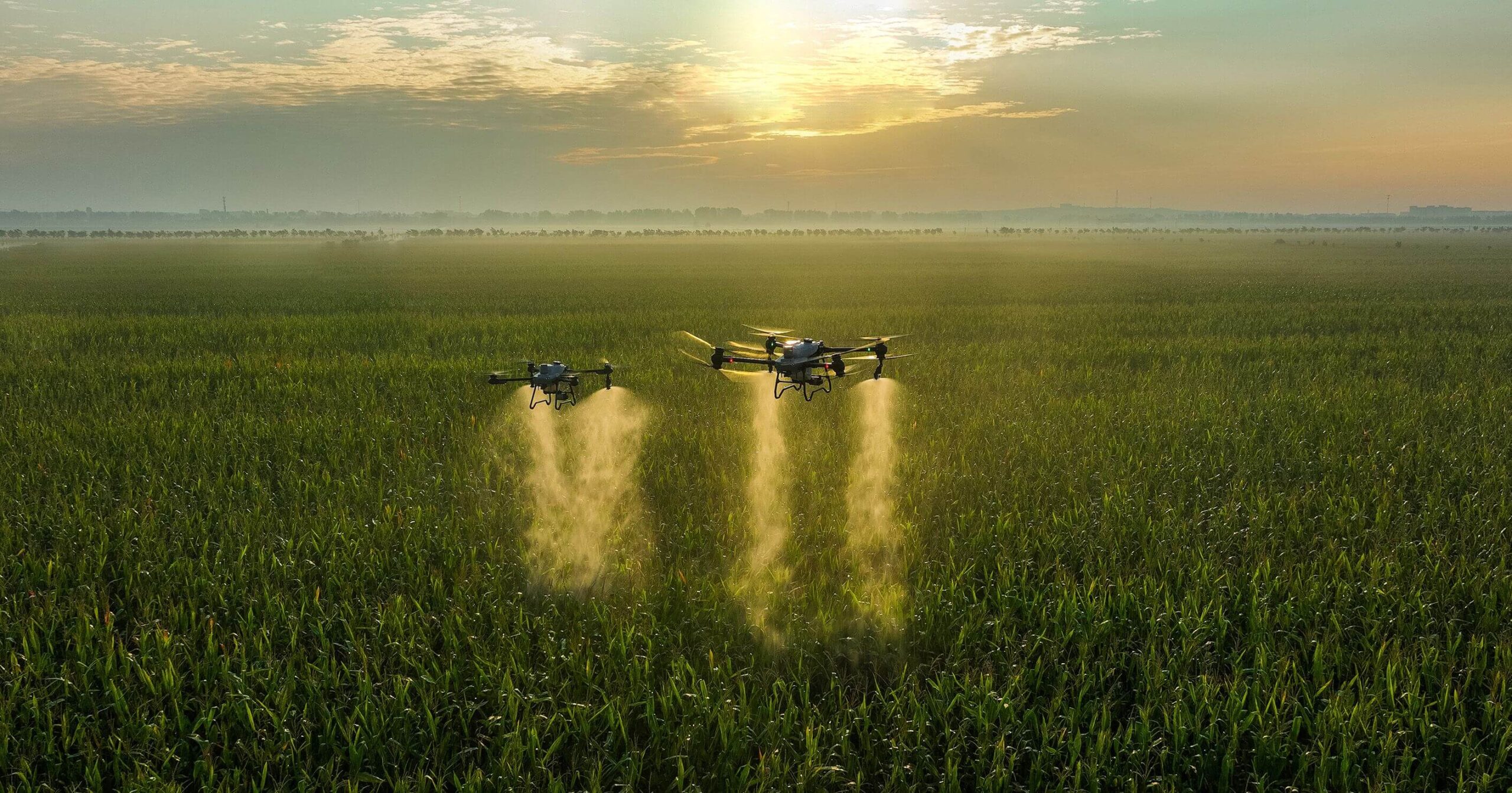
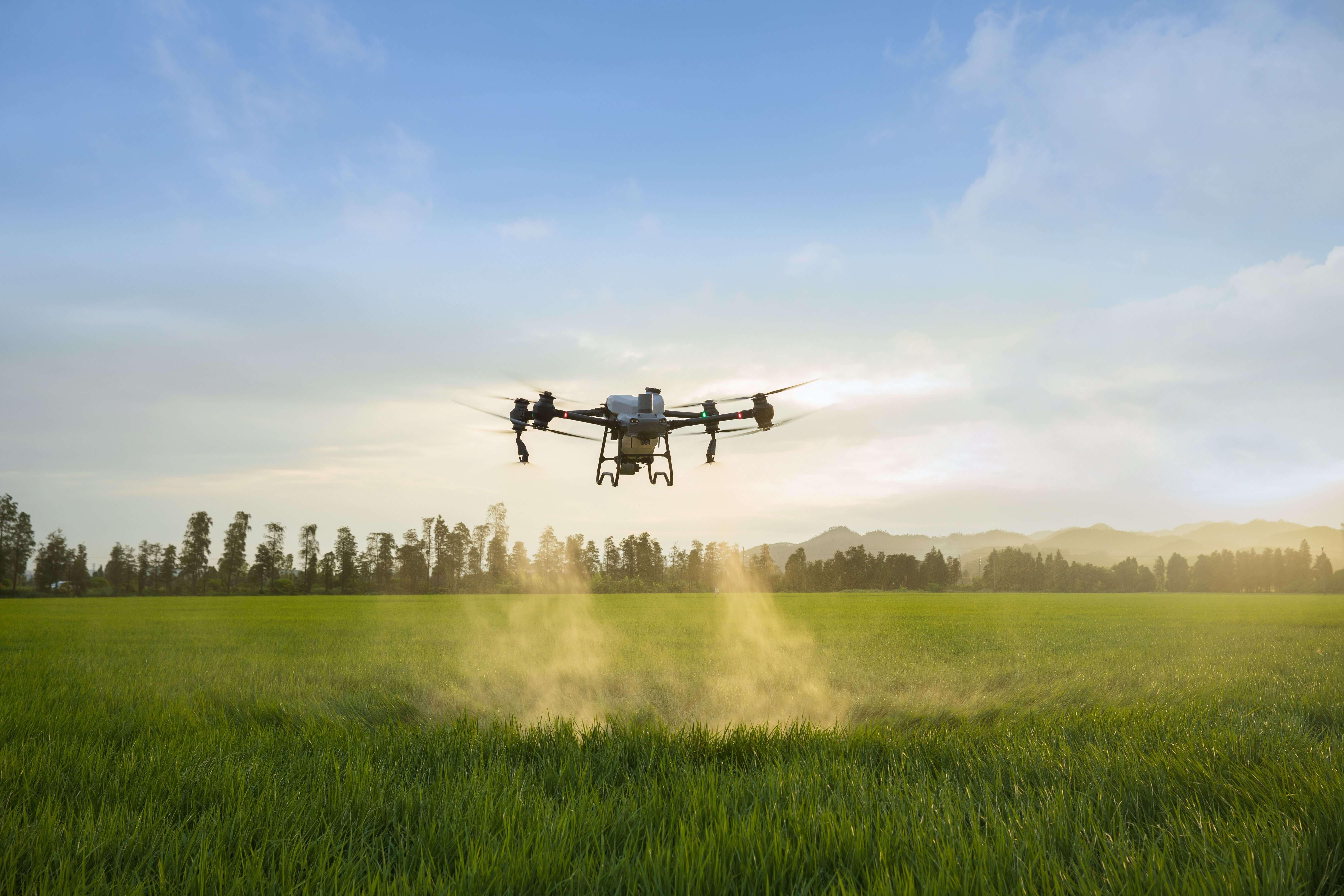
DJI describes the Agras T50 as a platform designed for spraying and spreading, with a 40-kilogram spraying payload. Its published performance figures are manufacturer test results, not a guarantee of acreage production on every Texas farm. Weather, refill logistics, terrain, carrier volume, and field layout all affect real-world output.
A few practical Texas budgeting examples
Example 1: 100 contiguous row-crop acres
A normal application-only quote might fall around $12–$18 per acre, or approximately $1,200–$1,800 before chemical.
If the operator is nearby and water is available at the field, there may be few additional charges. If the operator must haul water or travel a long distance, the effective rate will be higher.
Example 2: 25 acres of pasture in scattered locations
A pasture job may fall closer to $16–$25 per acre for application, but a minimum charge or mobilization fee could raise the effective price.
If the 25 acres are split between several locations, calculate the total job cost, not just the advertised rate.
Example 3: Orchard or specialty crop
Orchard and specialty applications often require more careful flight planning, canopy penetration, lower speeds, or additional passes. A planning range of $20–$35 or more per acre may be realistic, with the final quote depending heavily on the crop and product label.
Questions to ask before accepting a quote
When comparing agricultural drone services in Texas, ask each operator the same questions:
- Is the quote application-only, or does it include chemical?
- Who provides the water and carrier?
- Is mixing and loading included?
- Is there a minimum acreage or minimum job charge?
- Are travel and mobilization included?
- Does the price change for multiple fields?
- Are steep slopes, trees, power lines, or obstacles priced separately?
- What application volume and product rate are being assumed?
- What happens if wind or weather stops the job?
- Will you receive application records after the work?
- Is the operator properly licensed and insured for the work?
- Does the proposed application comply with the product label?
A responsible operator should be willing to explain the quote without making unrealistic promises about coverage, drift, or completion time.
A quick note on Texas and FAA requirements
Commercial drone spraying is not just a normal drone flight with a tank attached.
The FAA states that Part 137 governs aircraft, including drones, used to dispense certain agricultural products. Depending on the aircraft and operation, the operator may need the appropriate exemption or authorization, aircraft registration, pilot qualifications, and an Agricultural Aircraft Operator Certificate.
Texas requirements are separate. Commercial pesticide application generally involves licensing through the Texas Department of Agriculture pesticide program, including the appropriate aerial application and use categories for the work being performed.
These requirements can change and may depend on the aircraft, product, location, license type, and operation. Confirm current requirements with the FAA, TDA, and the product label before work begins. This article is for general information, not legal or regulatory advice.
The best way to compare agricultural drone companies in Texas
The lowest per-acre number is not always the best quote. Compare the total job cost, the operator’s experience, the equipment and support plan, the application timing, and what happens if field conditions change.
At Premier Outdoor Services, we provide custom spraying and agricultural drone services for Texas farms, ranches, landowners, and producers. We also offer drone sales and equipment support for customers considering their own agricultural spray drones.
When you call for a quote, have the acreage, field locations, crop or pasture type, product, target, water availability, and access conditions ready. The more complete the information, the more useful and accurate the quote will be.
